Traditional Chinese Fonts For Mac
- Mac Chinese Font Download
- Traditional Chinese Fonts For Mac Download
- Free Traditional Chinese Fonts For Mac
For many users, it is enough to know whether a Chinese font covers Traditional Chinese, Simplified Chinese, or both. More advanced users will still need an understanding of Chinese character sets and their history, along with the typography (and politics) of glyph variants, vertical text, and so on, in order to handle CJK texts and fonts in a. As you may have already surmised, Chinese font names are often prefixed with the name of the foundry. Fonts that being with “HY” are made by Han Yi. Fonts which begin with “FZ” are made by Fangzheng. Fonts beginning with “MF” are the work of Makefont, etc. Yes, You Have to License Chinese Fonts. HanWang Zhuyin ruby fonts in Traditional Kai (楷體) and Ming (明體) and characters, with Bopomofo on the right. Download and install all files starting with 'wp' for all alternate pronunciations (poyin zi). Many thanks to Chris Underwood for pointing me to the link above! Basic,Serif,Foreign,Arabic,Chinese,Cyrillic,Greek,Hebrew,Russian,Unicode Dejavu Serif Condensed Italic.TTF is available to download for Windows & MAC OS X Mingliu 6125 KB Download. Chinese Fonts free download - Script and Calligraphy Fonts, Fonts Manager, NJStar Chinese Word Processor, and many more programs.
Page Contents
Script Basics
The Chinese script is a logographic script structured so that each character
represents a single concept; characters are then combined
to form compound words.
Note: The script does also have a phonetic component.
Although there are several distinct varieties (or 'dialects') spoken in China including Mandarin and Cantonese (Hong Kong),they can all read many of the same 'written words' because the script is more based on meaning, not on sound.
See the links below for more information
Chinese Simplified, Chinese Traditional, Pinyin
There are several variants of the the Chinese script used in different contexts.
- Chinese Traditional is the older form of the script and is used in Taiwan, Hong Kong and other locations outside of China, including various 'Chinatowns' in the West. Chinese Traditional characters are more complex and more numerous.
- Chinese Simplified was developed in Mainland China (and adopted in Singapore) as a way of simplifying the older system in order to increase literacy. As part of the of the simplification, several Traditional characters were collapsed into one character in Simplified. Although it is relatively easy to convert from Chinese Traditional to Chinese Simplified, the reverse is not always true. As a result, most systems support both Traditional and Simplified Chinese in parallel.
- Pinyin is the term used to refer to the system of writing Chinese words in the Latin (English) alphabet. This was developed in the 1950’s in Mainland China to help increase literacy.
Example Traditional vs. Simplified Chinese
Adobe acrobat xi pro crack vn zoom. The table below shows how the name for Mandarin Chinese changes between scripts and even nationalities. Note though that the characters in the form from China are the same in both Traditional and Simplified Chinese.
| National Variant | Trad. | Simpl. | Pinyin |
|---|---|---|---|
| Singapore ‘Chinese language’ | 華語 | 华语 | Huáyǔ |
| Taiwan ‘national language’ | 國語 | 国语 | Guóyǔ |
| China ‘common speech’ | 普通話 | 普通话 | Pǔtōnghuà |
Language/Dialects
See the Other Language/Dialects section for information on forms like Cantonese and Wu.
Test Sites

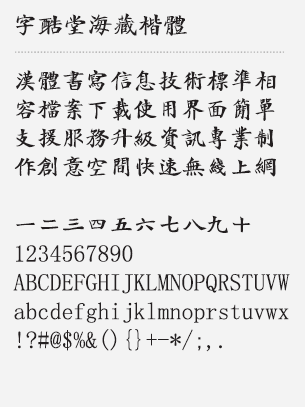
If you have your browser configured correctly, the Web sites above should display the correct characters. If you have difficulties, see list below for font and browser configuration instructions.
- Simplified Chinese – BBC News Chinese Language
- Traditional Chinese – Yahoo Taiwan News
If these sites are not displaying correctly, see the Browser Setup page for set up information.
Font Recommendations
Both Windows and Mac (and mobile platforms) provide a set of Japanese fonts, but more decorative versions may be found through font vendors or font download sites.
Traditional Chinese Fonts by Platform
- Windows – MingLiU, PMingLiU, Microsoft JhengHei
- Mac OS X – AppleLiGothiic Medium, Li Hei Pro, Apple LiSung, BiauKai, LiSongPro
- Mac System 9 – Taipei, others
Simplified Chinese Fonts by Platform
- Windows – SimSun, NSimSun, SimHei, Microsoft YaHei, others
- Mac OS X – Hei, STHeiti Light and Regular, STFangsong, STKaiti, STSong, Kai
- Mac System 9 – Beijing, others
Activate Input/Typing Utilities
Different Input Options
In Windows, Macintosh/iOS and Droid, input options for both Simplified and Traditional Chinese are available.
You can also activate different input options for each script. Typical options include
- Phonetic/Pinyin – Users can type a syllable in pinyin and then select the correct character.
- By Radical/Stroke – This allows a user to search and enter characters by radical or stroke forms.
- Handwriting – Some systems allow users to write a character on a trackpad.
- Additional standards may be supported.
Activate Input Utilities (Windows and Mac)
Yabla How to type Chinese using Pinyin gives detailed instructions for activating Chinese pinyin input on both Windows and Macintosh as well as iPhone and Droid.
You can also view generic documentation for
Tone Marks in Pinyin
Macintosh
If you activate the Extended (ABC) Keyboard on the Macintosh, the following codes allow you to type different accent codes.
| ACCENT | SAMPLE | TEMPLATE |
|---|---|---|
| Macron | Ā,ā | Option+M, X |
| Circumflex | Â,â | Option+6, X |
| Acute | á,Á | Option+E, X |
| Grave | À,à | Option+`, X |
| Umlaut | ü,Ü | Option+U, X |
Windows
A more limited set of accent codes are if the Windows International keyboard is activated. The long mark (macron) is not available there.
Web Development
Historical Encodings
Unicode (utf-8) which corresponds to GB18030 (mandated in the People’s Republic of China) is the preferred encoding for Web sites, but the following older encodings may be encountered.
- Use Unicode (
utf-8) whenever possible - Simplified Chinese Historic Encodings:gb18030, gb2312, gbk, Others
- Traditional Chinese Historic Encodings:big5, euc-tw, Others
Language Tags
Language Tags allow browsers and other software to process Chinese text more efficiently. Below are the recommended codes for different scripts
- Chinese:
zh(the most generic tag, but rarely used) - Mandarin Chinese, Simplified Script:
zh-Hansis preferred, butzh-CNmay be found on older sites. - Mandarin Chinese, Traditional Script:
zh-Hantorzh-Hant-TW(Taiwan) is preferredzh-TW - Pinyin (Mandarin):
zh-Latn-pinyinfor Mandarin. If the text is not Mandarin,use one the dialect codes below. - Cantonese (Hong Kong):zh-HK
Vertical Text
See the Vertical Text page for information on vertical Chinese text
Other Chinese Languages/Dialects
About Chinese Dialects/Sinitic Languages
Different regions of China speak in varieties which are traditionally called 'dialects', but they are so far apart that spealers from different regions may not understand each other. Linguists usually consider these dialects to be separate related languages and sometimes use the term 'Sintic languages'.
The standard form of modern spoken Chinese is called Mandarin Chinese, but other forms include Cantonese/Yue (Hong Kong), Wu (Shanghai) and Hakka.
Language Codes
For these varieties, there are currently two standards available, the IANA standard which adds 'variety' tags to the base zh tag or the SIL ISO-639-3 standard which treats dialects as separate languages.
Note: A — indicates no IANA or ISO-639-3 code registered.
| Variety | IANA | ISO-639-3 |
|---|---|---|
| 'Chinese' | zh | zho |
| Mandarin | zh-guoyo or zh-cmn | cmn |
| Cantonese | zh-yue or zh-HK | yue |
| Gan | zh-gan | gan |
| Hakka | zh-hakka | hak |
| Huizhou | — | czh |
| Jinyu | — | cjy |
| Min* | zh-min | — |
| Min Bei | — | mnp |
| Min Dong | — | cdo |
| Min Zhong | — | czo |
| Min-Nan | zh-min-nan | nan |
| Pu-Xian | — | cpx |
| Wu | zh-wuu | wuu |
| Xiang | zh-xiang | hsn |
* Min includes Fuzhou, Hokkein, Amoy, Taiwanese
Script and Language Tag
Most non-Mandarin Chinese documents are written in either Traditional Chinese (or Simplified Chinese with additional characters), pinyin or some other Western phonetic form. To distinguish the forms, one can use a script tags like wuu-Latn-pinyin (Wu Chinese in pinyin) or wuu-Hant (Wu Chinese in Traditional Chinese)
Links on Chinese Dialects
- China Language Com – Out of Singapore. Detailed information in Hakka and Cantonese
Links
Chinese Computing
Windows
- Pinyin Joe – Includes updates on Windows 7 and Windows Vista
- How to display and edit Chinese on English Windows systems – includes e-mail, Dreamweaver, etc.
- Chinese Windows How To – Initial Setup instructions
Macintosh
Mobile
- Chinese How To: Smartphones – Includes Droid, Blackberry, Windows, iOS
Linux/Unix
- Pinyin Joe – Includes updates on Ubuntu Linux
- Linux Chinese How To – Guide to Linux set up and common Linux/Unix problems. Out of Taiwan.
- www.linux.org.tw – In Chinese
Chinese Language
Script Basics
Chinese Dialects
- China Language Com – Out of Singapore. Detailed information in Hakka and Cantonese
Web Development Tips
- Reading and Writing Chinese Characters and Pinyin on the Web Using Unicode – Tips for writing Chinese text in Unicode.
- Creating
Chinese Web Pages (Chinese Computing) – Covers general guidelines
Technical Issues
- Encodings on Chinese Web Pages – part of a PHP tutorial
Introduction
Fonts begin where character sets end. The characters defined by the encodings inside your computer are abstract, whereas the glyphs defined by a font are concrete visual forms that can be rendered on screen or paper.
Outline fonts are fonts in which glyphs are described mathematically as 'outlines,' a series of line segments, arcs, and curves. They are fully scalable: to print or display a character, the outline is scaled to the desired size, then rendered by filling the outline with bits or pixels. The information provided here is limited to what the typical Chinese Mac user might want to know. If you want to learn more about font formats and printing technologies, Ken Lunde's CJKV Information Processing is very thorough on these topics.
Developed by Adobe, PostScript is a 'page-description' language for printers. It supports both graphics and text, with built-in support for fonts. The most common PostScript font format is Type 1. Chinese Postscript fonts use the CID format, which uses Type 1 character descriptions tailored especially for East Asian writing systems. CID stands for 'Character Identifier,' which refers to the numbers that are used to index and access the characters in the font. OS X provides full support for all types of PostScript-based fonts.
In 1991, Microsoft adopted Apple's TrueType font format, but they used a different approach to storing the font data. Font files had to be converted between Windows and Macintosh. Regardless, all TrueType fonts contain 'cmap' tables that map its glyphs to various encodings. With Mac OS X 10.5 (2007), Apple introduced full support for Windows TrueType font files, but the files must contain Unicode cmap tables. Most Windows 98 and later fonts have them, while most Windows 95 and earlier fonts do not.
OpenType is an open standard developed by Microsoft and Adobe in 1996 to absorb the underlying differences between the TrueType and PostScript formats. OpenType fonts also use cmap tables. There are two kinds of OpenType fonts: those that use PostScript Type 1 names and outlines and carry the .OTF extension, and those that use TrueType names and outlines and carry the .TTF (or .TTC) extension.
TrueType 'collections' with the .TTC extension contain multiple fonts, usually different weights of the same font. They can also use the Unicode technology of glyph variants (supported in OS X 10.6 and above) to provide localized glyphs for users in China/Singapore (the 'SC' locale), Hong Kong (the 'HK' locale), and Taiwan (the 'TC' locale).
Note: Formerly part of the TC ('Traditional Chinese') locale, the HK locale became necessary with HKSCS-2016. Previous editions of the HKSCS were compatible with Big Five, but the 2016 standard is Unicode-only and diverges by replacing 22 Big Five characters with variant forms from Unicode. See HKSCS.
Foundries
One way for individuals to obtain reliable, high-quality Chinese fonts is in retail bundles from established foundries. There aren't many of these companies. The making of an original Chinese font is a huge undertaking, somewhat less so now with the advent of new approaches and advanced technologies, but producing a finished, unique font is still a monumental task, involving a team of people working for months, if not years.
Many font bundles include installers (and other software) that only work on Windows, and thus they are sold as Windows-only, but you can always manually install the fonts on OS X. The best place to put them is in a folder of their own within your computer's /Library/Fonts/ folder, or your local ~/Library Fonts folder, which is where Font Book puts them if you use it to install them.
The current model for distributing fonts is via annual subscriptions. Adobe led the way with what is now TypeKit, and the rest of the industry has, for the most part, followed their lead. [NEED MORE DETAILS HERE] [DISCUSSION OF WEB FONTS AND CSS3]
Arphic [文鼎]
Taiwan. Known for a set of four fonts released with a broad public license in 1999 and 2000, used widely in open-source software:
- AR PL Mingti2L Big5 (文鼎 PL 細上海宋), AR PL KaitiM Big5 (文鼎 PL 中楷)
- AR PL SungtiL GB (文鼎 PL 簡報宋), AR PL KaitiM GB (文鼎 PL 簡中楷)
In 2010, they released a pair of updated fonts with a revised (non-profit) public license:
- AR PLMingU20 Light (文鼎PL明體U20 L)
- AR PLBaosong2GBK Light (文鼎PL報宋二GBK)
You might be able to find a copy of one of their retail bundles:
- Arphic OpenType 221: Arphic's full OpenType set, mostly Traditional-Chinese.
- Arphic OpenType 43: A selection from the full set.
- Arphic UniFonts 字博士 2: Arphic's full TrueType set of 255 fonts, mostly Traditional-Chinese.
- Arphic UniFonts 字達人 2: A selection from the full set.
In 2015, Arphic moved to a subscription model, called 'iFontCloud' [文鼎雲字庫]: http://www.ifontcloud.com/
DynaComware [華康]
Hong Kong. Formerly DynaLab. Maker of the 'DynaFont' [金蝶] line. They are the source of the current Apple fonts LiHei Pro and LiSong Pro in OS X, as well as most of Apple's fonts for Traditional Chinese in the Chinese Language Kit and OS 9. They also make the MingLiU/PMingLiU and DFKai-SB fonts that come with Windows. Most recently, their Shanghai, Hong Kong, and Taiwan divisions worked together with Apple to create PingFang, the new system font introduced in OS X 10.11 El Capitan.
There are Pro and Home (less expensive, for non-commercial use) editions available for DynaFont's 2016 TrueType font bundle: [Pro PDF] [Home PDF] They also sell an OpenType variant of the Pro edition, in which the font names match those of DynaFont's high-resolution CID-keyed fonts used by publishers: [OpenType Pro PDF]
To buy, see: R&B Computer Systems LTD (Hong Kong)
They've also implemented an annual subscription model: 'DynaFont Treasure' [華康寶藏] [PDF]
Monotype [蒙納]
Hong Kong. A long time vendor of Chinese OEM fonts, in 2006 Monotype's new owners [Monotype Imaging] also acquired China Type Design [中國字體設計] in Hong Kong. Maker of the 'Microsoft ZhengHei' fonts that come with Windows Vista and later. Fonts from both sources are available via LinoType. You can also get a Monotype Library Subscription. Priced for the commercial publishing market.
Hanyi [汉仪]
Beijing Hanyi is a well-known Chinese foundry, with an excellent web site showing a fine selection of original fonts, most available online through LinoType. Priced for the commercial publishing market.
Founder [方正]
Beijing. Founder Group was created at Beijing University in 1986 and incorporated in 1992. Maker of the 'Microsoft YaHei' fonts that come with Windows Vista and later, as well as Simsun (Founder Extended).
FounderType [方正字库] is still based at the Chinese Type Design and Research Center [中国文字字体设计与研究中心] at Beijing University.
ZhongYi [中标]
Beijing. ZhongYi is the maker of the standards-compliant SimHei (simhei.ttf), SimSun (simsun.ttf, simsunb.ttf), FangSong (simfang.ttf) and KaiTi (simkai.ttf) OEM fonts that come with Windows.
SinoType [华文]
Another important commercial foundry is SinoType in Changzhou, Jiangsu. They don't sell fonts retail, but their 'ST' fonts have been widely distributed on a variety of platforms, including OS X (STHeiti, STKaiti, STSong, and STFangsong) and Microsoft Office. Adobe Heiti Std, Adobe Kaiti Std, Adobe Song Std, and Adobe Fangsong Std are also based on the ST fonts.
Adobe
Mac Chinese Font Download

Adobe has defined two Chinese 'character collections' for its fonts:
- Adobe-GB1: https://github.com/adobe-type-tools/Adobe-GB1
- Adobe-CNS1: https://github.com/adobe-type-tools/Adobe-CNS1/
Adobe's Creative Cloud installs two Chinese OpenType fonts by default, Adobe Song Std Light and Adobe Ming Std Light. You can use TypeKit to install current versions of the CS 6 fonts listed below, along with Source Han Sans and Source Han Serif.
Adobe's Creative Suite 6 (2012) comes with the following OpenType Chinese fonts:
- Adobe Song Std (Light) [Adobe-GB1-5]
- Adobe Heiti Std (Regular) [Adobe-GB1-5]
- Adobe Kaiti Std (Regular) [Adobe-GB1-5]
- Adobe Fangsong Std (Regular) [Adobe-GB1-5]
- Adobe Ming Std (Light) [Adobe-CNS1-6]
- Adobe Fan Heiti Std (Bold) [Adobe-CNS1-6]
Adobe's 'Std' designation means the fonts cover standard Chinese character sets as defined in the Adobe GB1 and CNS1 collections, without defining glyph variants or other 'Pro' OpenType features. As of 2017, Adobe does not provide 'Pro' Chinese fonts.
Note: Other vendors use the 'Pro' designation differently, meaning the font simply has an extended character set, like the LiHei Pro and LiSong Pro fonts (Big-5E and HKSCS-2001) that come with OS X.
Fonts via Apple
Basic Fonts
Apple distributes a basic set of Chinese outline fonts with Mac OS 9 and OS X.
| Family | File name | Charset | OS 9 | 10.3 | 10.4 | 10.5 | 10.6 | 10.7 | 10.8 | 10.10 | 10.11 |
|---|---|---|---|---|---|---|---|---|---|---|---|
| PingFang SC PingFang HK PingFang TC | PingFang.ttc | Unicode+ | x | ||||||||
| Heiti SC Heiti TC | STHeiti Light.ttc STHeiti Medium.ttc | Unicode+ | x | x | x | x | x | ||||
| Kaiti SC Kaiti TC | 楷体.ttc/Kaiti.ttc | GB18030 | x | x | x | ||||||
| Songti SC Songti TC | 宋体.ttc/Songti.ttc | GB18030 | x | x | x | ||||||
| STXihei | 华文细黑.ttf | GB18030 | x | x | x | x | x | x | x | x | |
| STHeiti | 华文黑体.ttf | GB18030 | x | x | x | x | x | x | x | x | |
| STKaiti | 华文楷体.ttf | GB18030 | x | x | x | x | x | x† | x† | x† | |
| STSong | 华文宋体.ttf | GB18030 | x | x | x | x | x | x† | x† | x† | |
| STFangsong | 华文仿宋.ttf | GB18030 | x | x | x | x | x | x | x | x | |
| Hei | Hei.ttf | GB2312 | x | x | x | x | x | x | x | ||
| Kai | Kai.ttf | GB2312 | x | x | x | x | x | x | x | ||
| Song | Song.ttf | GB2312 | x | x | |||||||
| Fang Song | Fang Song.ttf | GB2312 | x | x | |||||||
| Beijing | GB2312 | x | |||||||||
| LiHei Pro | 儷黑 Pro.ttf | Big-5E HKSCS | x | x | x | x | x | x | x | x | |
| LiSong Pro | 儷宋 Pro.ttf | Big-5E HKSCS | x | x | x | x | x | x | x | x | |
| BiauKai | BiauKai.ttf | Big-5 | x | x | x | x | x | x | x | ||
| Apple LiGothic | Apple LiGothic Medium.ttf | Big-5 | x | x | x | x | x | x | x | ||
| Apple LiSung | Apple LiSung Light.ttf | Big-5 | x | x | x | x | x | x | x | ||
| Taipei | Big-5 | x |
- Unicode+ = Contains the CJK Unified Ideographs block, Extension A, and a selection of 6,217 characters from Extension B. These fonts support GB 18030, Big-5E, HKSCS, Japanese JIS X 0213, and Vietnamese Hán-Nôm.
† = Beginning with OS X 10.8, STKaiti and STSong are located within the larger Kaiti SC (楷体.ttc) and Songti SC (宋体.ttc) font collections. In OS X 10.9 and above, these file names change to Kaiti.ttc and Songti.ttc and include TC fonts.
Hiragino Sans GB ~ Beginning with OS X 10.6, Apple includes this GB18030 character-set font in two weights [Hiragino Sans GB W3.otf, Hiragino Sans GB W6.otf]. Designed to coordinate with Hiragino Sans, a Japanese font that comes in ten weights.
Arial Unicode MS ~ Beginning with OS X 10.5, Apple includes this basic Monotype Unicode font from Microsoft Office [Arial Unicode.ttf] for the same interoperability reasons it includes other Microsoft Office fonts, like Arial, Courier New, Times New Roman, Tahoma, Verdana, and so on.
Additional Fonts
Beginning with OS X 10.8, Apple includes a variety of additional Chinese fonts with OS X. For the character sets and weights for each, see the Fonts section for your OS: 10.8, 10.10, 10.11.
| Family | File name | Foundry | 10.8 | 10.10 | 10.11 |
|---|---|---|---|---|---|
| Yuanti SC | Yuanti.ttc | SinoType | x | x | x |
| Xingkai SC | Xingkai.ttc | SinoType | x | x | x |
| Baoli SC | Baoli.ttc | SinoType | x | x | x |
| Libian SC | Libian.ttc | SinoType | x | x | x |
| Lantinghei SC Lantinghei TC | Lantinghei.ttc | Founder | x | x | x |
| Hannotate SC Hannotate TC | Hannotate.ttc | Dynacomware | x | x | |
| HanziPen SC HanziPen TC | Hanzipen.ttc | Dynacomware | x | x | |
| Wawati SC Wawati TC | WawaSC-Regular.otf WawaTC-Regular.otf | Dynacomware | x | x | x |
| Weibei SC Weibei TC | WeibeiSC-Bold.otf WeibeiTC-Bold.otf | Arphic | x | x | x |
| Yuppy SC Yuppy TC | YuppySC-Regular.otf* YuppyTC-Regular.otf* | Monotype | x | x | x |
* = In OS X 10.8, the file names for this font are in Chinese: 雅痞-简.otf and 雅痞-繁.otf.
Fonts via Microsoft
Microsoft Windows and Office contain a core set of Chinese fonts. With Windows 10 and Office 2016, these have become harder to access for use outside of Windows and Office. [HOW TO?]
| Font name | Chinese | Charset | File name | Windows 2000 | Windows XP | Windows 7 | Windows 10 |
|---|---|---|---|---|---|---|---|
| Microsoft JhengHei | 微軟正黑體 | UnicodeA | msjh.ttf msjhbd.ttf | v6.02 v6.00 | [?] | ||
| MingLiU PMingLiU* | 細明體 新細明體 | Unicode | mingliu.ttc | v3.00 | v3.21 | v7.00†‡ | [?] |
| MingLiU-ExtB PMingLiU-ExtB* | UnicodeB | mingliub.ttc | v7.00† | [?] | |||
| DFKai-SB | 標楷體 | Unicode | kaiu.ttf | v3.00 | v3.00 | v5.00 | [?] |
| Microsoft YaHei | 微软雅黑体 | GB18030 | msyh.ttf msyhbd.ttf | v6.02 v6.02 | [?] | ||
| SimHei | 黑体 | GBK | simhei.ttf | v2.10 | v3.02 | v5.01‡ | [?] |
| SimSun | 宋体 | GBK | simsun.ttc | v2.11 | v3.03 | v5.03‡ | [?] |
| SimSun-ExtB | UnicodeB | simsunb.ttf | v5.00 | [?] | |||
| FangSong | 仿宋 | GB18030 | simfang.ttf | v5.01 | [?] | ||
| KaiTi | 楷体 | GB18030 | simkai.ttf | v5.01 | [?] | ||
| FangSong_GB2312 | 仿宋_GB2312 | GB2312 | SIMFANG.TTF | v2.00 | v2.00 | ||
| KaiTi_GB2312 | 楷体_GB2312 | GB2312 | SIMKAI.TTF | v2.00 | v2.00 |
- Unicode = Contains the Unicode CJK Unified Ideographs block.
- UnicodeA = Contains the Unicode CJK Unified Ideographs and Extension A blocks.
- UnicodeB = Contains the Extension B block (only).
* = PMingLiU is a proportional font, while MingLiU is monospaced. This difference does not affect Chinese text.
† = Includes MingLiU_HKSCS and MingLiU_HKSCS-ExtB.
‡ = Also supports Unicode's CJK Unified Ideographs Extension A block.
In addition, the Microsoft Office XP Proofing Tools (and Chinese editions) include the font Simsun (Founder Extended) [SURSONG.TTF, 宋体-方正超大字符集]. Created in January 2001, it contains over 64,000 hànzi, including most of the CJK Unified Ideographs Extension B block. Works perfectly in OS X 10.3 and above. Install it in the /Library/Fonts folder, and re-login after installing it. To avoid problems in OS X 10.4 and above, you should use Font Book to install this font. Use File > Add Fonts..
Troubleshooting:
- DFKai-SB has the same PostScript name ('DFKaiShu-SB-Estd-BF') as BiauKai, which comes with OS X. Only one font with a given PostScript name can be active in OS X at a time. They are the same font in terms of design and weight, but the Apple font is limited to the Big Five character set, while the Windows version is a GBK font. If you want to use this font for both simplified and traditional Chinese, then use Font Book to deactivate BiauKai and activate DFKai-SB instead.
Open Source
Noto CJK Sans and Noto CJK Serif
These are useful, free fonts from Google in seven weights (each) that pretty much everyone should have, unless you have already installed Adobe's Source Han Sans and Source Han Serif, which are the same fonts. The principal designer was Ryoko Nishizuka of Adobe, working with Google and three font foundries in China (SinoType), Korea, and Japan. The selection of the character set was overseen by Ken Lunde of Adobe.
The basic idea is a set of fonts that can be used together as a unified font in a document that combines CJK languages, with the forms of the glyphs for each language correct for that region. They neglected to include glyphs localized for Hong Kong, but that will be rectified in v 2.000. You set them as the default for each language in your word processor or page design application, and off you go:
Note: The SC fonts contain both SC and TC code points for the core 8,105 characters encoded in Unicode as of 2016 and listed in China's 通用规范汉字表 standard (a.k.a. TGH-2013), so there's no need for a separate TC font for China (as opposed to Taiwan and Hong Kong).
Hanazono [花園]
The Hanazono fonts are an offshoot of the GlyphWiki project, a database project based in Japan, with all the advantages and drawbacks of the Wiki approach:
http://glyphwiki.org (Japanese)
http://en.glyphwiki.org (English translation)
As of January 2018, Hanazono Mincho [花園明朝] is comprised of two fonts with a total of 88,884 Unicode kanji plus 8,828 glyph variants registered in the current Ideographic Variation Database (IVD):
- HanaMinA.ttf (CJK Unified Ideographs, Extension A, Compatibility Ideographs, Radicals, Strokes, plus the IVD variants)
- HanaMinB.ttf (Extensions B, C, D, E, F)
BabelStone Han
Traditional Chinese Fonts For Mac Download
Andrew West's free, open-source BabelStone Han font is focused on providing GSource glyphs (i.e., those defined by China as the standard forms) for Unicode hanzi. His discussion of the details of this ongoing project is illuminating. West is an IRG participant as a member of the UK delegation, so he is well-informed and up-to-date on the progress of their work, and his fonts reflect that knowledge. See: http://www.babelstone.co.uk/Fonts/Han.html
He also provides complete fonts for Phags-pa and Tangut, among others.
Font Tools
None of the tools listed here provides specific information about Chinese character-set coverage in a given font. At best, they organize the glyphs in a font by Unicode character blocks. This can be helpful, but it won't tell you, for example, what version of Hong Kong SCS is supported. Toward that end, we provide text files containing the hanzi for selected Chinese character sets:
- 通用规范汉字表 (TGH-2013): [China Simplified] [Hong Kong Traditional]
- Big Five (CNS 11643-1992, Planes 1 and 2), ordered by Academia Sinica educational level: [Download]
- Beyond Big Five: Big-5E (1998), listed by Big-5 block: [Download]
- Beyond Big Five: Hong Kong SCS 1999, 2001, 2004, 2008, 2016: [Download]
- Unicode CJK Unified Ideographs (1993+): [Download]
- Unicode CJK Unified Ideographs Extension A (1999): [Download]
- Unicode CJK Unified Ideographs Extension B (2001): [Download]
- Unicode CJK Unified Ideographs Extension C (2009): [Download]
- Unicode CJK Unified Ideographs Extension D (2010): [Download]
- Unicode CJK Unified Ideographs Extension E (2015): [Download]
- Unicode CJK Unified Ideographs Extension F (2017): [Download]
- Unicode CJK Strokes 2005, 2008: [Download]
In theory, you can use these by copying and pasting the text into the Preview > Custom window in Font Book. In practice, such large files can cause problems. LinoType FontExplorer has a similar feature. Font File Browser also works for this. See below.
Font Book
Comes with OS X. You can create smart collections for Chinese fonts by setting the Languages criteria to 'Chinese (Simplified)' and/or 'Chinese (Traditional).' 'Chinese' also works. For the most complete collection, use all three together. This works well for the fonts that come with OS X, but YMMV when you start adding other fonts:
For curated collections limited to Chinese fonts you might actually want to use, build regular collections from this Chinese smart collection.
Note: There is a bug in macOS 10.12 Sierra for smart collections and Chinese. They don't work. Fixed in macOS 10.13 High Sierra.
LinoType FontExplorer
Primarily a font manager like Font Book, but functions well as a font viewer, also like Font Book. LinoType is a vendor of high-quality fonts from a wide range of foundries, including Chinese. See our discussion of Chinese font foundries, above. OS X 10.9 and above.
http://www.fontexplorerx.com
Font File Browser
Browse the contents of any font, whether it is installed on your machine or not. Useful for examining fonts without installing them.
OS X 10.11 and above. Teac ca 200 driver windows 10.
Font Editors
Apple Font Tools
Free. Apple provides a suite of command-line font tools, along with a set of instructions and a tutorial.
DTL OTMaster 6
From the makers of DTL FontMaster, Dutch Type Library's OTMaster 6 allows you to review and edit the tables and contours of fonts in all OpenType and TrueType formats. Full Unicode support for large CJK fonts and complex-script (Indic, Arabic etc.) fonts.
OS X 10.7 and above.
Glyphs 2
Glyphs 2 has the stamp of approval of FounderType at Beijing University, since they sell it on their site for the domestic Chinese market, here.
OS X 10.9 and above.
FontLab VI
FontLab VI is FontLab's current flagship product, released December 2017 after more than two years in development.
As of December 2017: 'CJKV fonts may be imported into FontLab but they can only be generated as TrueType fonts and will have no vertical metric sidebearings.' I don't know what that means, but FontLab has a history of good support for Chinese fonts in products like AsiaFont Studio.
Free Traditional Chinese Fonts For Mac
OS X 10.10 and above.